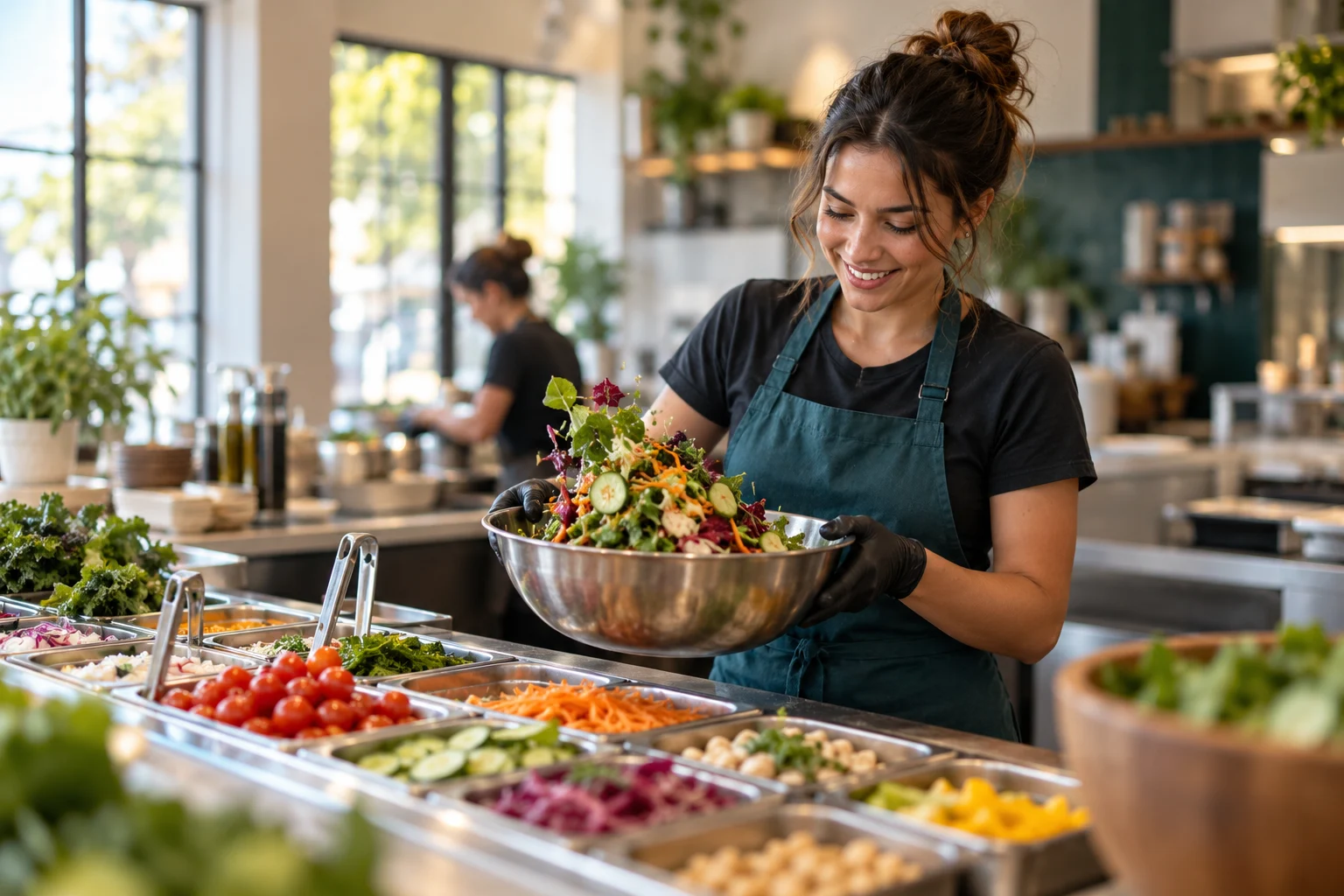
How soup and salad franchises work
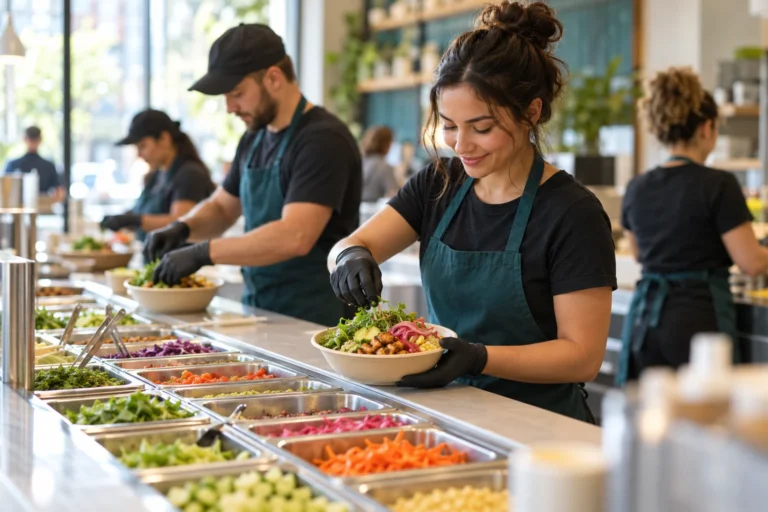
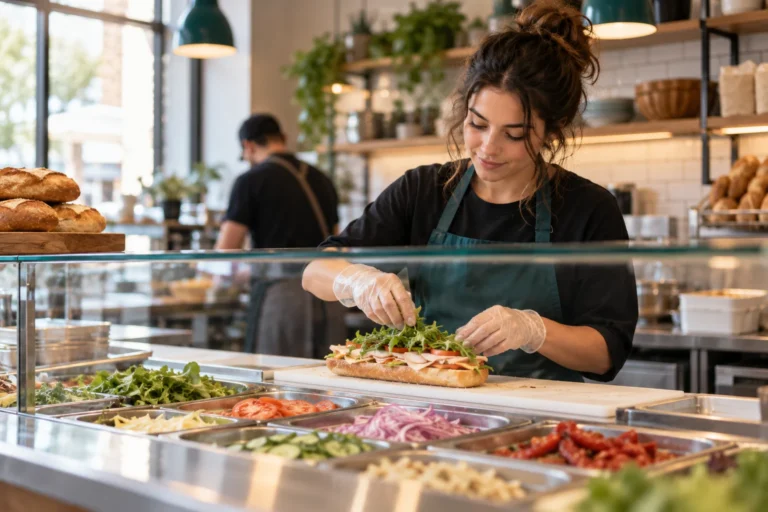
Soup and salad franchises sell chopped and tossed salads, grain bowls, soups, wraps and sides, often built to order. Customers include office workers, fitness-minded diners, students and anyone looking for a lighter option. Weekday lunch is typically the strongest period, with dinner and weekends varying by location.
Fresh produce is prepared daily, which increases prep labor and makes spoilage control important. Kitchens may need less cooking equipment than fry-heavy concepts, but soup programs require kettles and holding equipment. Units usually lease inline spaces near offices, medical centers and busy retail, and online ordering and catering salad bowls can add volume. Produce prices shift with weather and seasons. Soup demand often rises in cooler months, which can help balance salad sales across the year. Dressings and soups are made in house or delivered from a central kitchen, depending on the brand.
Why buyers consider soup and salad franchises
- Health-oriented demand Many diners want fresh, lighter meals, supporting steady interest in salad and soup concepts.
- Seasonal balance Salads favor warm months and soups favor cool ones, which can smooth sales through the year.
- Lighter kitchens Limited frying and grilling can reduce hood requirements compared with other food formats.
What it takes to invest
Soup and salad franchises often cost roughly $300,000 to $900,000 all in, depending on square footage, build-out, refrigeration, prep areas and soup equipment, plus local rent. Second-generation restaurant space may reduce costs. Hold working capital for produce cost swings and the ramp to a steady lunch base. Item 7 of the Franchise Disclosure Document lists the estimated initial investment.
The owner's role
Owners oversee daily produce prep, freshness standards and fast service at lunch. The job includes ordering to limit spoilage, scheduling prep crews and developing catering with nearby offices and organizations. Evenings may be quieter depending on location. Owners with several units rely on managers trained to maintain freshness and portion control.
What to evaluate
- Daily prep labor and its effect on total labor cost
- Produce spoilage rates and ordering tools at comparable units
- Weekday lunch population near your proposed site
- Dinner and weekend sales, not just weekday lunch
- Catering and online ordering share of sales
Who tends to do well
Soup and salad franchises suit owners who care about healthy food, can manage a prep-heavy kitchen and want lunch-focused hours. They can fit career changers with management experience and moderate capital, especially in office-dense or health-conscious markets. It is less suited to anyone who dislikes early prep work.
Questions buyers ask
Are salad franchises profitable?
Results vary by brand, location and costs, and no outcome is guaranteed. If the brand provides financial performance data, it appears in Item 19 of the Franchise Disclosure Document. Talk with several current owners about their experience.
Do salad franchises slow down in winter?
Salad demand often softens in colder months, though many brands add warm bowls and soups to balance it. Ask franchisees in similar climates how sales shift by season. Catering often helps fill the gap.
How much prep work does a salad franchise require?
Considerable, since vegetables and toppings are prepared fresh daily. Ask how many prep hours comparable units schedule and whether the brand uses any pre-cut or delivered ingredients. Prep time is a major labor cost.