
How bagel and breakfast franchises work
Bagel and breakfast franchises serve bagels, egg sandwiches, pancakes, omelets, coffee and brunch dishes. Bagel shops tend to run counter service for commuters and families, with dozens and spreads sold to take home or bring to the office. Breakfast and brunch cafes use table service and attract weekend crowds, retirees and business meetings.
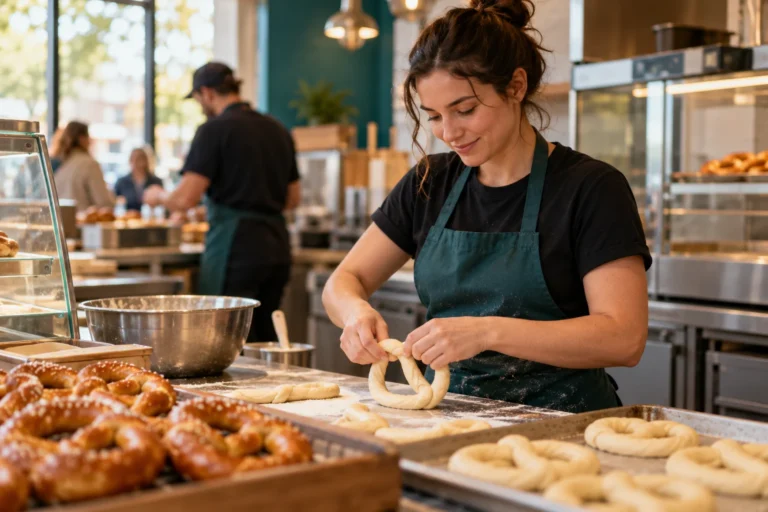
Because most sales happen before early afternoon, many units close by midafternoon, which shortens the operating day but concentrates demand. Weekend mornings can be the busiest of the week, especially for sit-down cafes. Bagel shops may boil and bake on site, which adds equipment and early labor, while cafes need full kitchens and dining rooms. Coffee and catering trays for offices help lift the average ticket and fill weekday mornings. Bagel shops also sell spreads, dozens and coffee by the box, which carries well into office meetings and weekend gatherings.
Why buyers consider bagel and breakfast franchises
- Daytime hours Many breakfast concepts close by midafternoon, which supports a more predictable schedule.
- Habitual visits Morning routines create frequent repeat customers who come in several times a week.
- Office catering Bagel trays and breakfast boxes for meetings add larger weekday orders.
What it takes to invest
Bagel and breakfast franchises often range from roughly $300,000 for a counter-service bagel shop to $1.2 million or more for a full-service breakfast cafe, all in. Dining room size, kitchen equipment, on-site baking and build-out condition drive the spread. Keep working capital for the ramp, since breakfast habits take time to form. Item 7 of the Franchise Disclosure Document lists the estimated initial investment.
The owner's role
Owners start very early, especially when baking on site, and manage tight morning rushes that leave little room for staffing gaps. Weekends often require the most attention in sit-down cafes. Afternoons are typically for prep, ordering and paperwork rather than service. Owners of several units rely on dependable managers who can handle early opens.
What to evaluate
- Weekday versus weekend sales mix at comparable units
- Operating hours the brand requires and whether evening service is optional
- On-site baking equipment and the early labor it needs
- Coffee program quality and its share of total sales
- Occupancy cost relative to a shorter operating day
Who tends to do well
Bagel and breakfast franchises suit owners who are morning people, want their evenings back and like building a regular customer base. Counter-service bagel shops fit first-time owners with moderate capital, while full-service cafes suit those with hospitality experience and more capital.
Questions buyers ask
Do breakfast franchises close early?
Many close by early or mid-afternoon, which is a major draw for owners. Hours vary by brand and location, and some add lunch or extended hours. Ask the franchisor what is required and what comparable units actually do.
Is a bagel shop or a breakfast cafe a better franchise?
They differ. Bagel shops usually cost less, use counter service and depend on weekday commuters. Breakfast cafes cost more, use servers and rely heavily on weekends. Your capital, experience and preferred schedule should guide the choice.
Can a breakfast-only business be profitable?
It depends on the brand, location and costs, and no outcome is guaranteed. Review Item 19 of the Franchise Disclosure Document if the brand provides financial performance data and talk with several owners about their results.