How burger franchises work
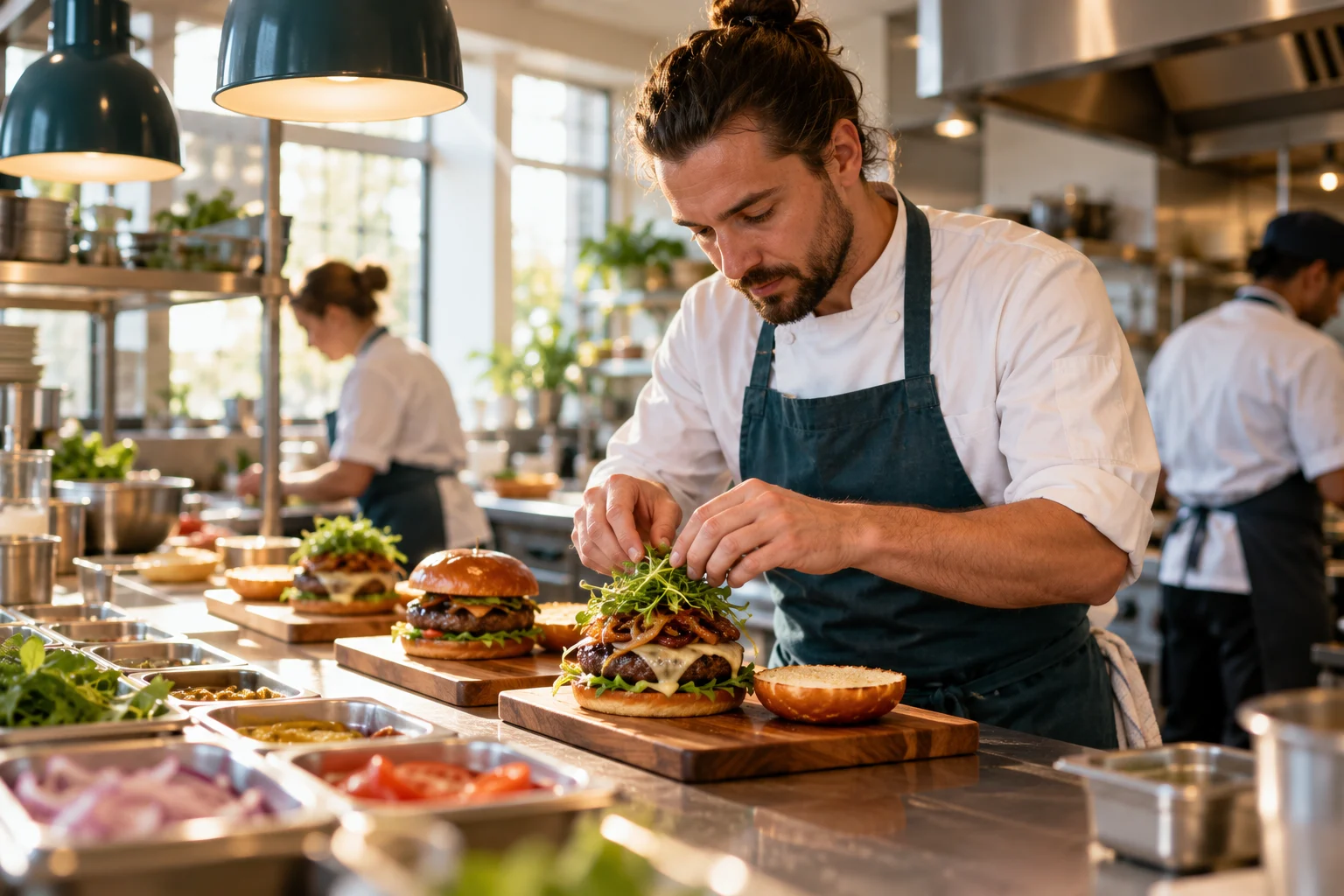
Burger franchises sell burgers, fries, chicken sandwiches, shakes and drinks. Classic drive-thru brands compete on speed and value, while better-burger concepts aim at guests willing to pay more for fresh beef, specialty toppings and a nicer dining room. Lunch and dinner are the core dayparts, with families, workers and younger diners as frequent customers.
The economics revolve around beef and potato costs, grill and fry station labor, and ventilation-heavy kitchens. Better-burger units often lease inline or end-cap space with patios, while classic formats rely on freestanding drive-thru pads. Add-ons such as shakes, sides and combo upgrades raise the ticket, and beer or wine may appear in some sit-down formats where licensing allows. Because nearly every market already has several burger options, the strength of the brand's quality story matters a great deal.
Why buyers consider burger franchises
- Universal menu Burgers appeal across age groups and regions, so menu education is rarely needed.
- Premium positioning Better-burger brands can command a higher check by emphasizing quality ingredients and preparation.
- Attachment items Fries, shakes and sides lift the average order and help offset protein costs.
What it takes to invest
Burger franchises often run from roughly $500,000 to more than $2 million all in. An inline better-burger unit tends toward the lower half, while a freestanding drive-thru building on owned or ground-leased land sits higher. Hoods, grills, fryers and fire suppression make the kitchen package expensive, and site work varies widely. Reserve working capital for beef price swings and the opening months. Item 7 of the Franchise Disclosure Document gives each format's estimate.
The owner's role
Burger owners manage cook-to-order quality at speed, which takes training and steady supervision on the grill line. Daily work includes scheduling, inventory, food safety and guest experience, and owners of drive-thru units watch lane times closely. In multi-unit groups the owner focuses on hiring strong managers and tracking food and labor costs by store.
What to evaluate
- How the brand manages beef price volatility in contracts and menu pricing
- Ventilation, grease and fire suppression requirements and their cost in your site
- Better-burger versus value positioning against competitors already in your trade area
- Whether alcohol is part of the format and the licensing it requires locally
- Patio, seating and drive-thru features that affect site selection
Who tends to do well
Burger franchises suit operators with restaurant or high-volume retail experience, solid capital and a willingness to manage a busy cook line. Better-burger formats attract buyers who like hospitality and premium positioning, while drive-thru formats fit multi-unit investors focused on volume.
Questions buyers ask
What is a better-burger franchise?
Better-burger concepts sell higher-quality burgers, often with fresh beef, premium toppings and hand-spun shakes, at a higher price than value chains. They usually use counter service with a more comfortable dining room and sometimes beer or wine.
How do beef prices affect a burger franchise?
Beef is the largest food cost on the menu, so price swings move margins quickly. Ask how the franchisor negotiates supply contracts, how often it adjusts menu prices and how owners fared during past periods of high beef costs.
Is the burger market too crowded for a new franchise?
Most markets have plenty of burger options, so success depends on a clear position and a strong site. Study competitors near your proposed location and ask franchisees how new units performed in similarly crowded areas.