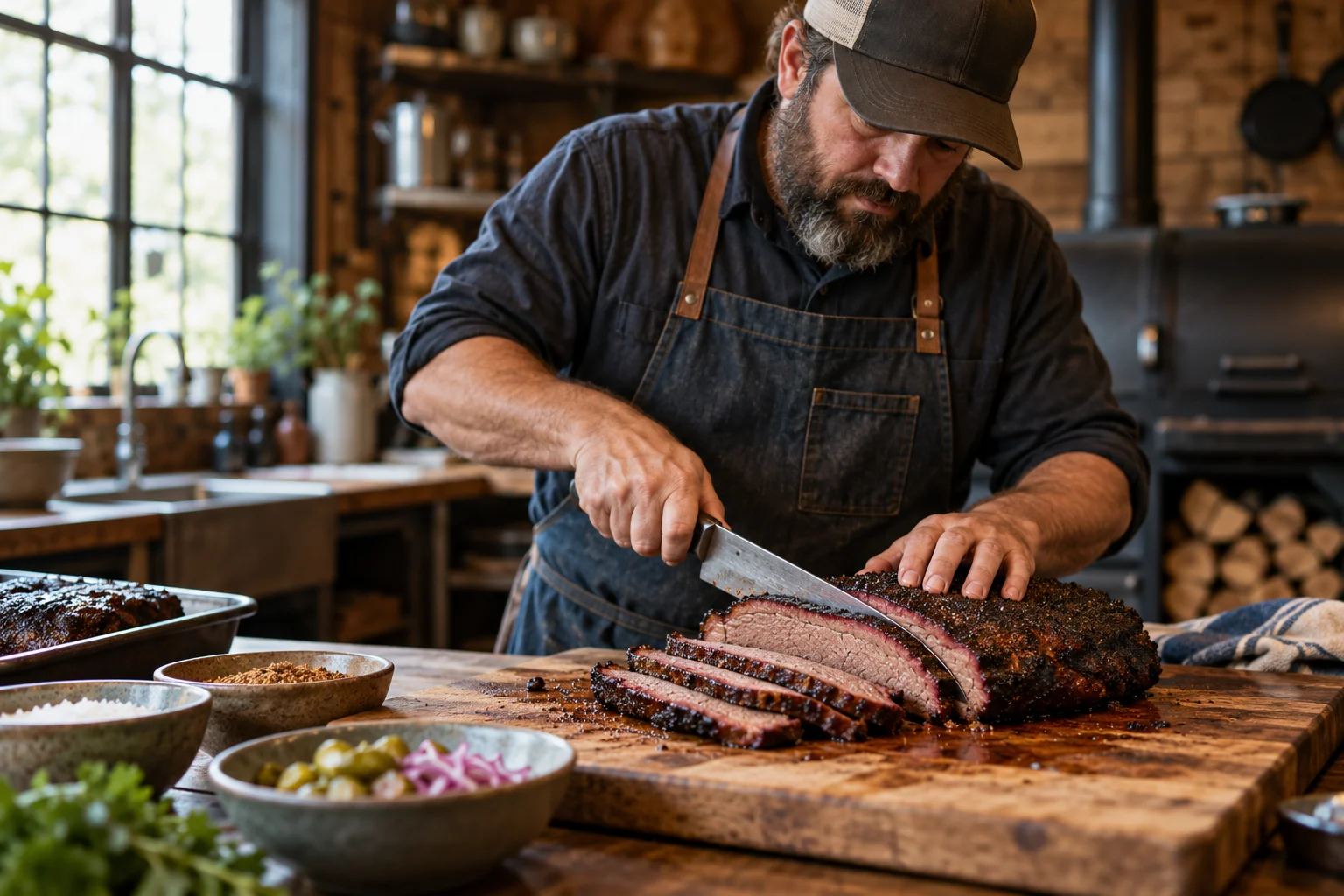
How barbecue franchises work
Barbecue franchises sell smoked brisket, pulled pork, ribs, chicken and sausage with sides, sauces and desserts. Customers include families, lunch crowds, groups and anyone ordering for an event. Catering for offices, weddings, reunions and holidays is a natural fit, and family meal packs are popular for takeout.
Meats can smoke for many hours, so production starts well before opening and daily forecasting is critical: running out disappoints guests, while overproduction wastes expensive protein. Smokers require ventilation, permits and maintenance. Formats range from counter-service smokehouses to full-service restaurants with bars. Beef and pork prices shift over time, and brisket in particular can move margins. Regional barbecue styles create loyal followings, so a brand's style should suit local tastes. Leftover smoked meat can sometimes be repurposed into chili, sandwiches or specials, but most brands still set strict holding times for quality and safety reasons.
Why buyers consider barbecue franchises
- Catering strength Barbecue is a favorite for events and large groups, which supports sizable orders.
- Distinctive product Slow-smoked meats are hard to replicate at home, giving customers a clear reason to buy.
- Takeout family meals Bundled meats and sides travel well and suit families feeding several people.
What it takes to invest
Barbecue franchises often cost roughly $500,000 to $2 million all in. Smokers, ventilation, building size, dining room and bar features and site work drive the range, and freestanding locations sit higher. Keep working capital for meat price swings and catering equipment. Item 7 of the Franchise Disclosure Document lists the estimated initial investment for each format.
The owner's role
Owners oversee early-morning smoking, forecasting and quality control, plus a catering operation that may involve vans, equipment and event staff. Food safety around large batches of cooked meat needs constant attention. Evenings and weekends are busy in sit-down formats. Owners of several locations rely on trained pitmasters and managers to maintain consistency.
What to evaluate
- Smoker type, capacity and the permits and ventilation they require at your site
- Catering share of sales and the equipment it requires
- How the brand manages brisket and pork cost volatility
- Production forecasting tools to reduce waste and sellouts
- Fit between the brand's barbecue style and local preferences
Who tends to do well
Barbecue franchises suit owners who appreciate craft production, can manage early starts and enjoy catering sales. They fit operators with restaurant experience and solid capital, especially in markets with a strong barbecue culture. It is less suited to anyone who dislikes early starts or large weekend events.
Questions buyers ask
Do I need to know how to smoke meat to own a barbecue franchise?
Usually not. Franchisors train owners and pitmasters on recipes, equipment and timing. You will need to hire and retain staff who follow the process carefully, since consistency depends on it.
How important is catering for a barbecue franchise?
For many units it is a major source of sales, especially around holidays and events. Ask comparable owners how much of revenue catering represents and what equipment and staffing it requires.
Are there special permits for smokers?
Smokers may require specific ventilation, fire safety approvals and air quality permits depending on location. Rules vary by city and state, so confirm what applies where you live before signing a lease.