How fast casual franchises work
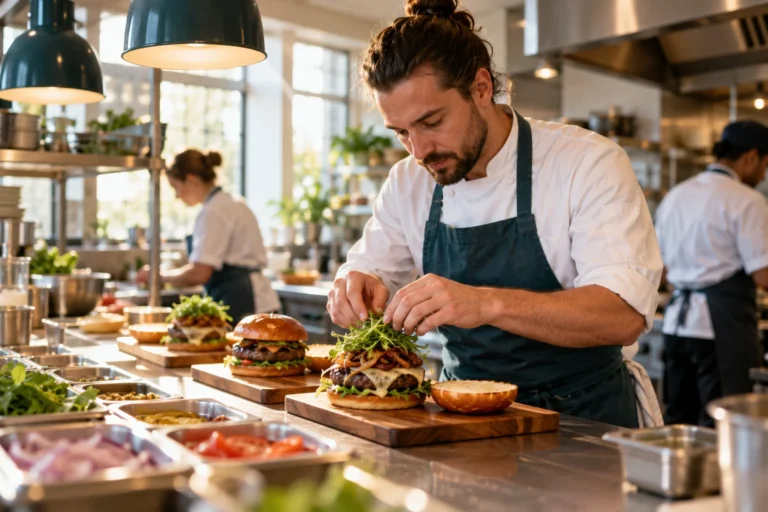
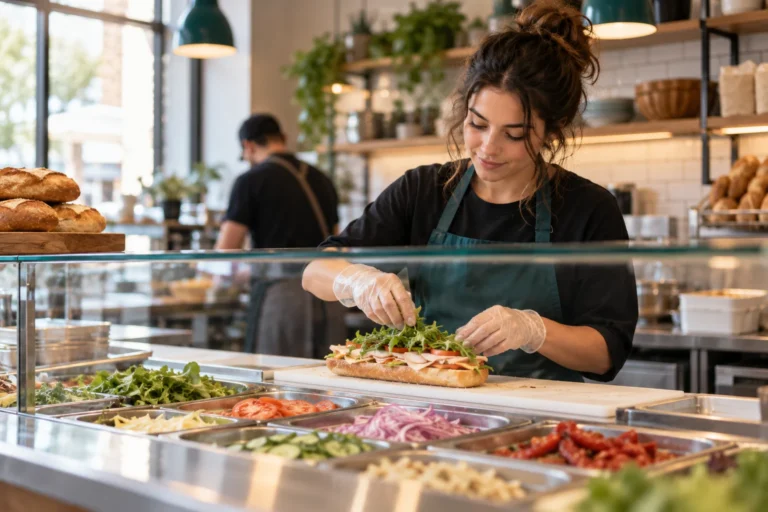
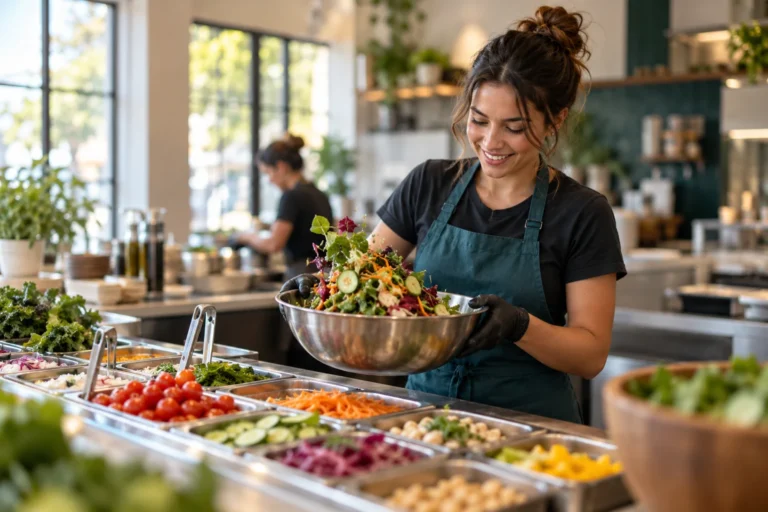
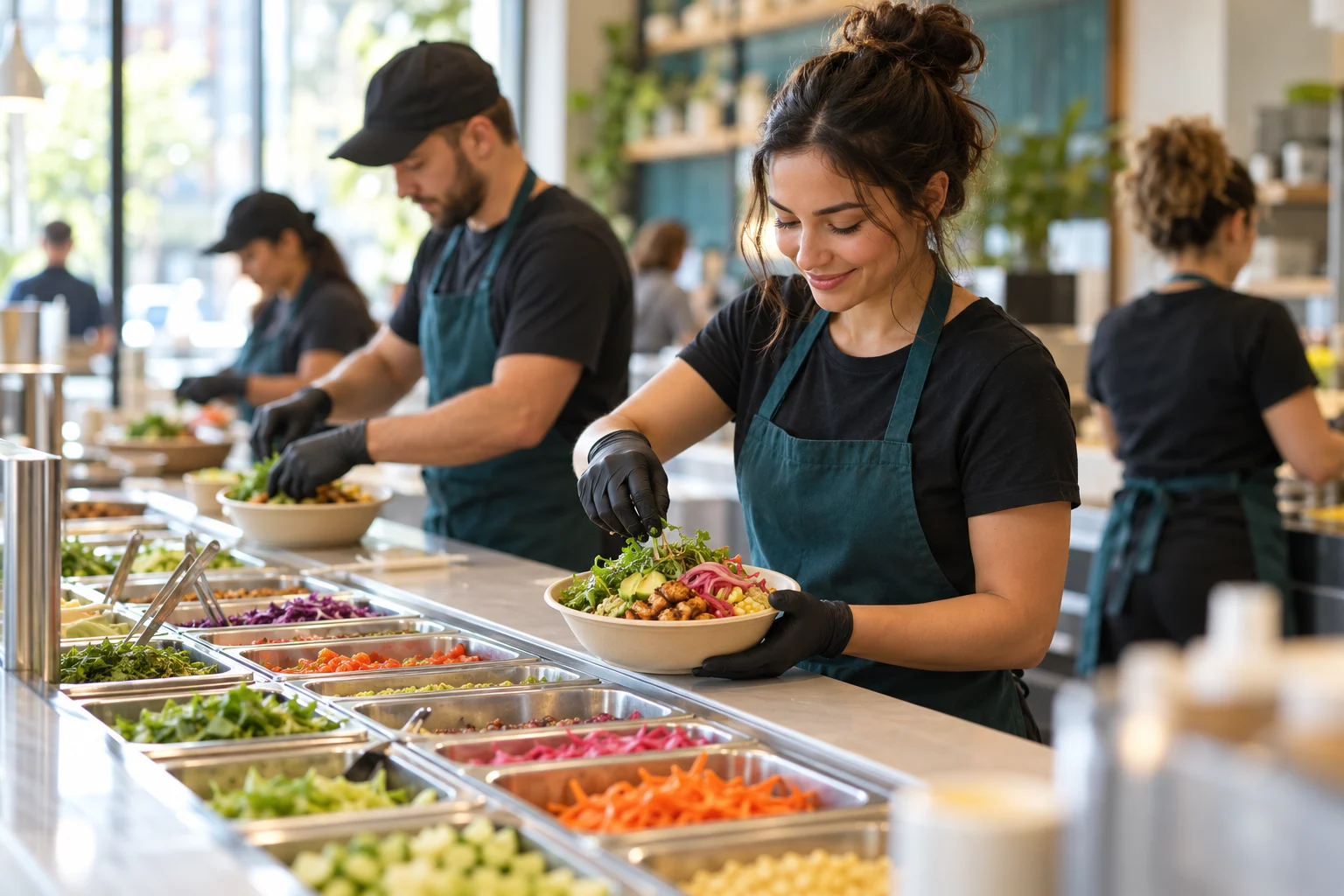
Fast casual franchises serve bowls, salads, wraps, burritos and similar made-to-order meals along a visible assembly line. Guests are often office workers at lunch, students and young families at dinner, and a growing share order ahead through an app for pickup or delivery. The dining room is designed to feel more polished than a traditional quick-service restaurant, with better finishes and seating.
Revenue comes from a check that is usually higher than fast food, paired with fast line speed at peak hours. Lunch is often the anchor daypart, so location near offices, campuses or busy retail matters. Most units lease end-cap or inline space in shopping centers rather than freestanding pads, and many skip the drive-thru, though some brands now add a pickup window. Labor runs heavier than at simpler formats because prep is done fresh each day.
Why buyers consider fast casual franchises
- Customer preference Many diners now favor customizable, fresher meals and will pay modestly more for them than for traditional fast food.
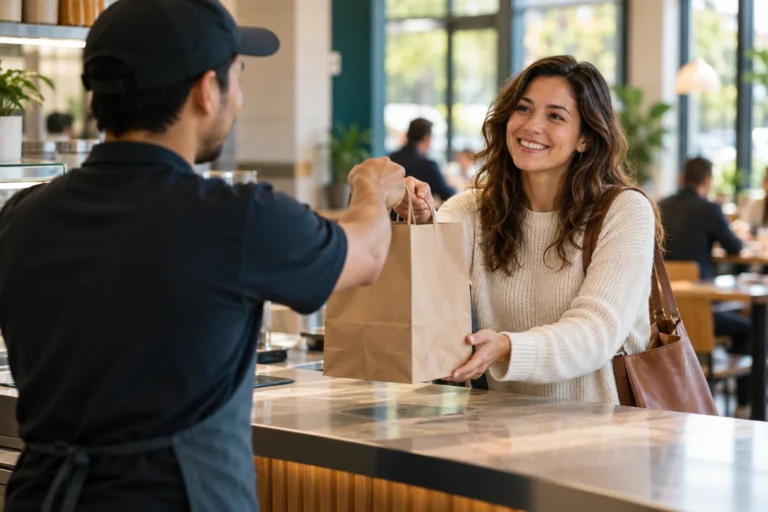
- Digital ordering App and online orders add volume without adding seats, and the line format adapts well to a second make line for pickup.
- Simpler footprint Inline shopping center space usually costs less to build than a freestanding drive-thru restaurant.
What it takes to invest
Fast casual units often cost roughly $400,000 to $1.5 million all in, depending on whether you take second-generation restaurant space or build out a vanilla shell, the size of the dining room, the kitchen package and local construction costs. Rent in high-traffic centers can be steep, so budget working capital for several months of slower sales while the location builds a following. Item 7 of the Franchise Disclosure Document breaks down each cost category.
The owner's role
Expect to be closely involved early on. Fresh prep, a long assembly line and lunch rushes require tight scheduling and well-trained crews, and the owner usually sets that tone. You will also manage online ordering accuracy, catering inquiries and local marketing. Many brands expect owners to open more than one unit, so the role often evolves into overseeing general managers across a small territory.
What to evaluate
- How sales split between lunch, dinner, catering and digital orders at comparable units
- Prep labor hours required each day and how they affect your labor percentage
- Daytime population and office occupancy near your proposed sites
- How the brand manages third-party delivery fees and menu pricing for delivery
- The development schedule you must commit to and the penalties if you miss it
Who tends to do well
Fast casual suits operators who enjoy hospitality and team leadership, have access to meaningful capital and want a growth path through several units. It is a good match for former managers from retail or restaurant chains. It is less suited to someone seeking a hands-off investment from day one.
Questions buyers ask
What is the difference between fast casual and fast food?
Fast casual typically offers made-to-order meals with fresher ingredients, a higher average check and a more comfortable dining room. Fast food focuses on speed, value pricing and drive-thru volume. Both use counter service, but the menu, labor model and real estate often differ.
Do fast casual franchises need a drive-thru?
Most do not, which keeps real estate costs lower than freestanding pads. Some brands now add a dedicated pickup window for digital orders. Ask how pickup windows affect sales at comparable units before paying more for a site that has one.
Is fast casual a good first franchise?
It can be if you have the capital, enjoy leading hourly teams and can be present while the unit ramps. Training programs are usually thorough. Talk with several current owners about the hours they worked in the first year before deciding.