How pizza franchises work
Pizza franchises make and sell pizza alongside wings, salads, breadsticks and desserts. Customers are families, office groups, students, sports viewers and party planners, and evening and weekend orders usually dominate. Group orders give pizza a larger ticket than most counter-service meals, and the menu travels well.
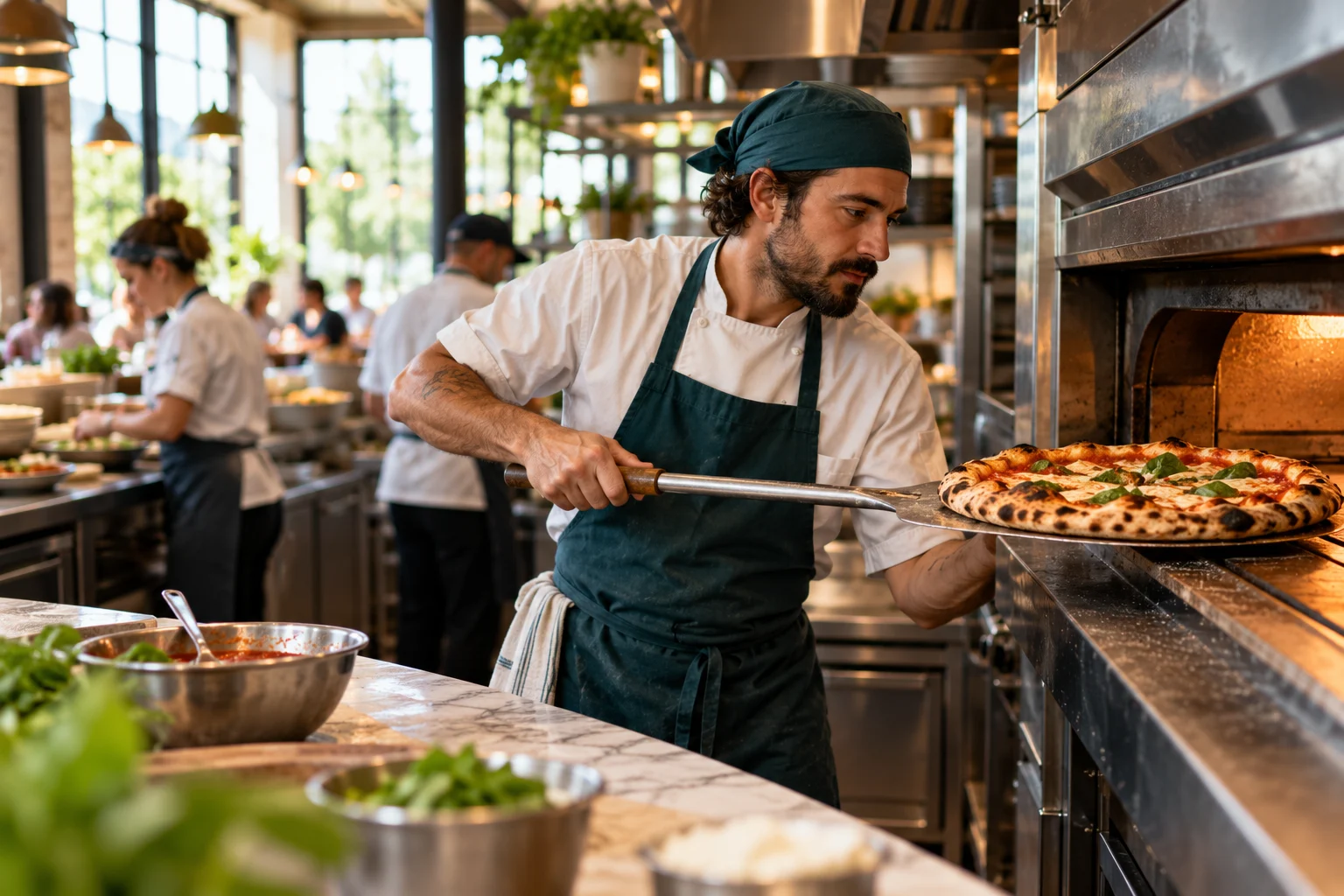
Formats vary widely. Carryout and delivery units can operate from modest inline space with a small lobby, while fast-casual pizza lines and dine-in concepts need larger rooms and more front-of-house staff. Delivery brings reach but adds driver labor, insurance and mileage costs, or commissions if third-party platforms carry the orders. Oven type, from conveyor to deck or wood-fired, shapes both the menu and the equipment budget. Local competition from independents and large national chains is usually intense, so a clear position matters. Online ordering is now the norm, so the quality of the brand's app and website directly affects sales.
Why buyers consider pizza franchises
- Steady demand Pizza is a habitual family meal and a default for gatherings, which supports frequent repeat orders.
- Flexible footprints Carryout and delivery formats can work in smaller, lower-rent spaces than most sit-down restaurants.
- Larger tickets Group and family orders raise the average check compared with single-person meals.
What it takes to invest
Pizza franchises often cost roughly $250,000 to $1 million or more all in. A carryout and delivery shop sits toward the lower end, while a fast-casual line or full dining room with a bar pushes higher. Ovens, ventilation, build-out and delivery equipment are the main variables, along with local rent. Keep working capital for driver payroll and marketing during the first months. Item 7 of the Franchise Disclosure Document details the costs for each format.
The owner's role
Pizza owners usually work evenings and weekends, when demand peaks. The job covers dough and prep standards, driver scheduling and safety, order accuracy and local marketing to schools, teams and businesses. Delivery-heavy units add the work of recruiting reliable drivers and managing vehicle insurance. Multi-unit owners shift toward overseeing managers and comparing performance across stores.
What to evaluate
- Delivery radius and whether nearby franchisees or company stores overlap your area
- Split between first-party delivery, third-party platforms and carryout at comparable stores
- Driver pay, mileage reimbursement and insurance requirements
- Oven type and its effect on menu, speed and equipment cost
- How the brand competes with discount pricing from large national chains
Who tends to do well
Pizza suits owners who are comfortable with evening and weekend hours, enjoy community marketing and can manage a mix of kitchen staff and drivers. A carryout format can be a reasonable entry point for first-time food owners. Dine-in formats suit operators with more capital and hospitality experience.
Questions buyers ask
Is a pizza franchise cheaper to open than other restaurants?
Carryout and delivery formats often cost less than full restaurants because they use smaller spaces with limited seating. Dine-in pizza concepts can cost as much as other sit-down restaurants. Item 7 of each brand's Franchise Disclosure Document shows the range for every format.
Do pizza franchises have to offer delivery?
Not always. Some brands focus on carryout or dine-in, while others rely on their own drivers or third-party platforms. Ask how delivery is handled, who pays the commissions and what share of sales it represents at existing stores.
How competitive is the pizza franchise market?
Very competitive, with national chains, regional brands and independents in most towns. Look for a brand with a clear point of difference, whether quality, format or price, and check how many pizza outlets already serve your trade area.