How alarm and security franchises work
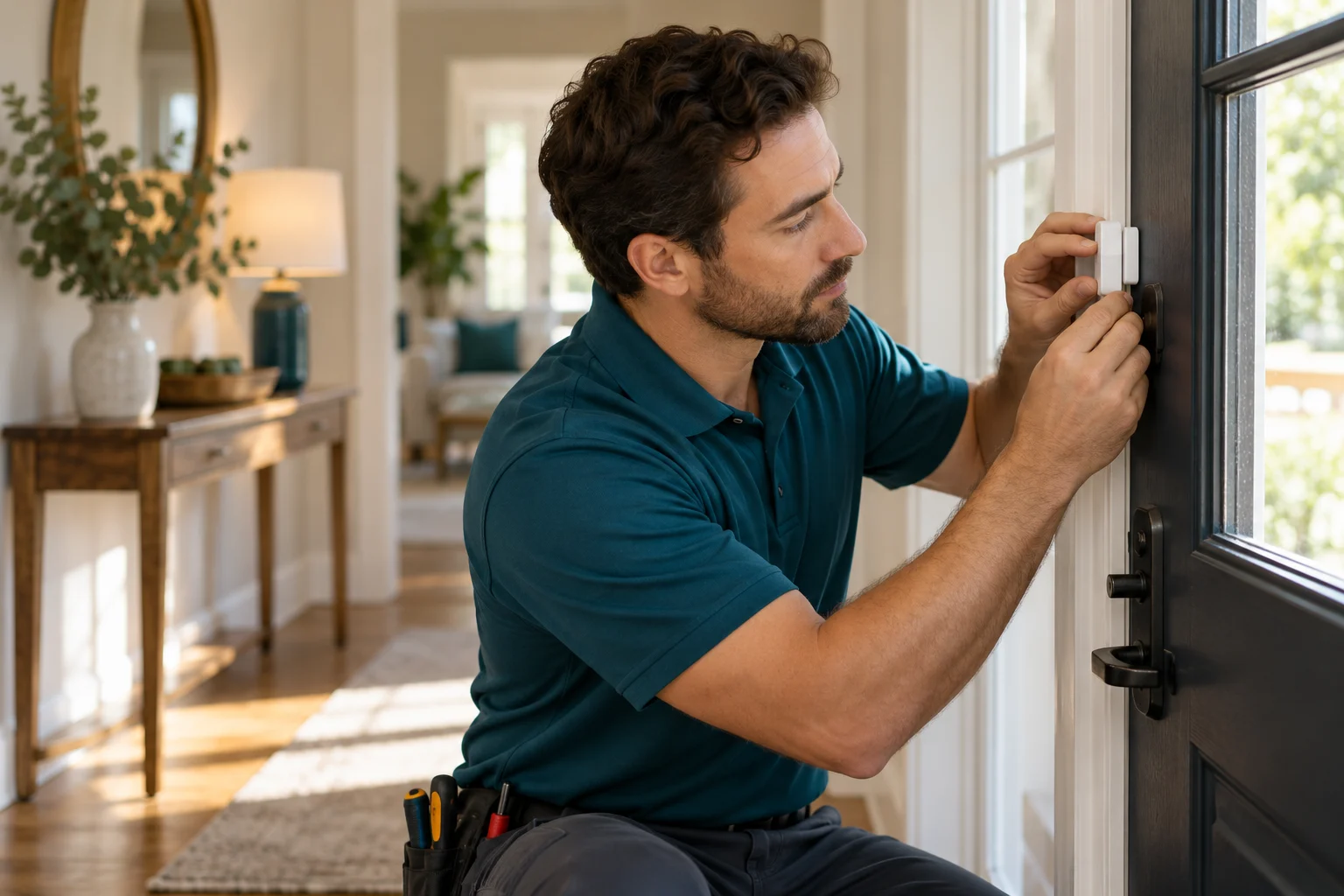
An alarm and security franchise designs and installs intrusion alarms, cameras, smart locks, doorbell video, fire and environmental sensors, and connected home controls. Customers include homeowners, landlords and small businesses, with some brands also serving commercial access control.
Revenue typically combines an upfront installation charge with recurring monthly monitoring and service contracts. That recurring base can become a meaningful asset over time, though the economics depend on contract length, cancellation rates and who owns the monitoring relationship. The business runs from a small office or warehouse with installer vans and modest inventory. Selling is consultative, often in the customer's home, and technicians must be trained on changing equipment and software. Customer service after installation matters as much as the sale, because a customer who stays on monitoring for years is worth far more than one who cancels early. Retention is the metric to study.
Why buyers consider alarm and security franchises
- Recurring monitoring revenue Monthly contracts can build a steady base that grows with each installation.
- Durable demand for safety Concern for family and property keeps security relevant for homes and small businesses.
- Technology upsells Cameras, smart locks and automation give existing customers reasons to add on.
What it takes to invest
Alarm and security franchises often run from roughly $75,000 to $250,000 all in, depending on vans, equipment inventory, office space, licensing and the initial sales and installer team. Working capital is especially important here, because equipment and labor are paid upfront while monitoring revenue arrives monthly over time. Item 7 of the Franchise Disclosure Document lists each brand's estimated initial investment.
The owner's role
Owners usually lead sales early, meeting homeowners and business owners to design systems, then hire installers and a service coordinator. You manage licensing compliance, inventory, scheduling and customer retention. As the account base grows, the role shifts toward commercial relationships, managing sales staff and protecting the recurring revenue through good service.
What to evaluate
- State and local licensing for alarm installers, low-voltage work and the business itself
- Who owns the monitoring contracts and recurring revenue, you or the franchisor
- Contract terms, cancellation rates and attrition reported by existing franchisees
- Equipment platform, supplier lock-in and how often systems need updating
- Funding the gap between installation costs and monthly monitoring income
Who tends to do well
Alarm and security suits owners who like technology, consultative selling and building a long-term customer base. Veterans and former law enforcement or military personnel often relate to the mission. Expect licensing work and a cash flow model that rewards patience.
Questions buyers ask
Do I need a license to own an alarm and security franchise?
Many states and cities license alarm companies, installers or both, and some require background checks. Licensing varies by state, so confirm what applies where you live and who in your business must hold credentials.
How does monitoring revenue work in a security franchise?
Customers usually pay a monthly fee for professional monitoring and service, often under a contract. Who owns those accounts and how they are valued differs by brand. Review the franchise agreement carefully and check Item 19 for any performance data the franchisor discloses.
Can I sell to businesses as well as homeowners?
Many security brands serve both. Commercial work can carry larger projects and access control, but it may require additional licensing and technical skill. Ask the franchisor what share of its owners pursue commercial accounts and what training supports it.