How oil change and quick lube franchises work
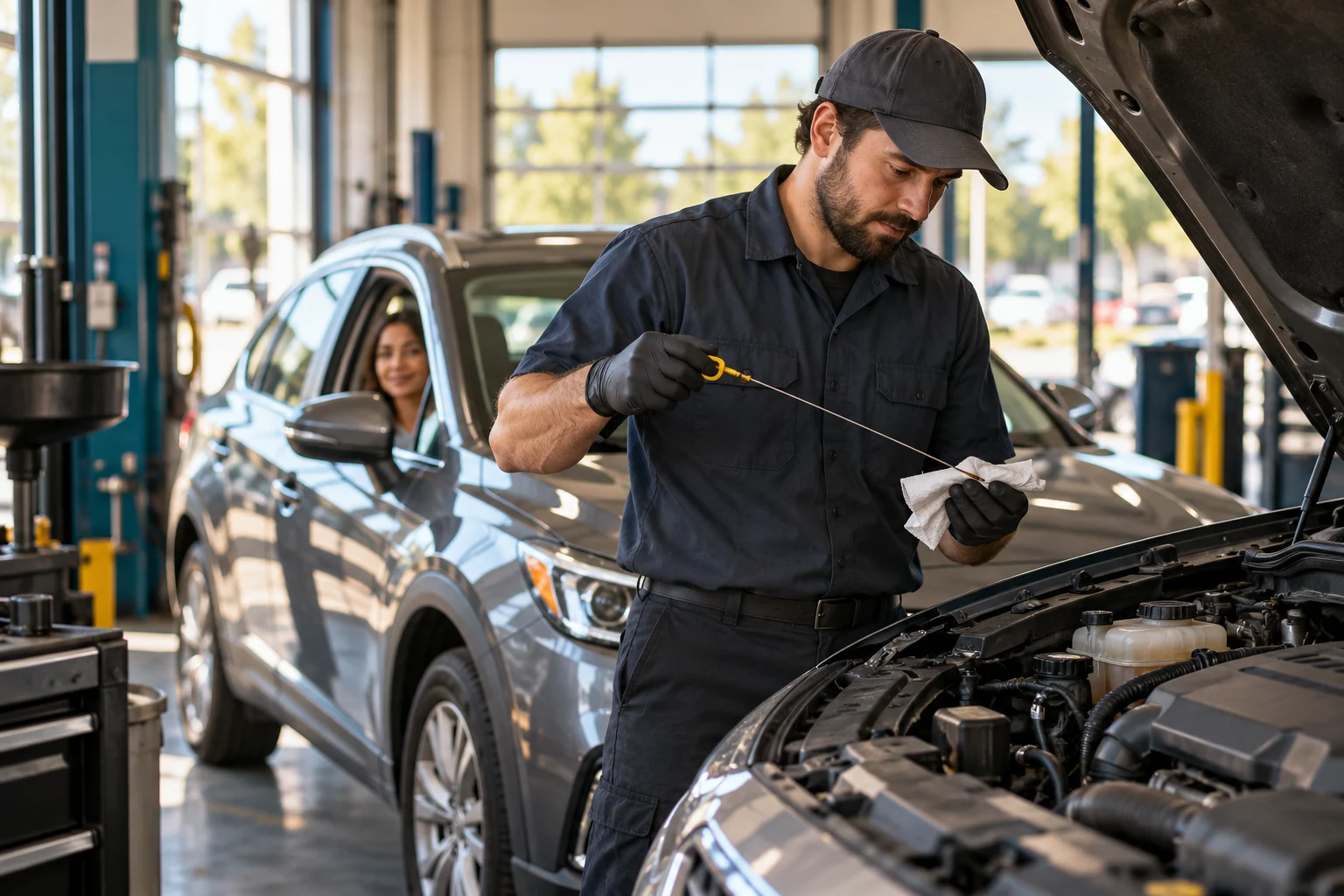
A quick lube franchise performs fast preventive maintenance: oil and filter changes, fluid top-offs, wiper blades, air filters, tire pressure checks and sometimes inspections. Many shops let drivers stay in their car while technicians work from a lower bay, so the visit takes minutes rather than hours. Customers are commuters, families and small fleets who want maintenance done without an appointment or a long wait.
The ticket is modest, so the economics depend on car count and on attaching add-on services to each visit. Because vehicles return on a regular maintenance interval, a loyal customer generates repeat visits through the year. Locations need visible sites on busy roads, often with a purpose-built pit or bay design, so real estate is a major decision. Staffing is entry-level and trained in-house, which makes turnover and consistent speed the operational focus.
Why buyers consider oil change and quick lube franchises
- Built-in repeat visits Maintenance intervals bring the same drivers back several times a year without heavy re-marketing.
- Trainable workforce Technicians are usually trained in-house on a narrow menu, reducing reliance on scarce master mechanics.
- Scalable format A standardized footprint and service menu lends itself to opening several locations in one market.
What it takes to invest
Quick lube locations often run from roughly $300,000 to well over $1 million all in. The biggest variable is real estate: a ground-up build on a busy corridor costs far more than converting or leasing an existing service building. Equipment, signage, initial inventory and training add to the total. Plan working capital to cover staff and marketing while car count builds. Item 7 of the Franchise Disclosure Document lists each brand's estimate.
The owner's role
Owners manage throughput. Daily attention goes to staffing each shift, training crews on speed and accurate service, tracking car count and add-on sales, and keeping the shop clean and inviting. You will not need to change oil yourself, though many owners learn the bay routine to coach it well. A single shop typically needs a strong manager before the owner can step back, and multi-unit owners often focus on site selection and people development.
What to evaluate
- Traffic counts, access and visibility at the specific sites you are considering
- How the brand handles longer oil-change intervals and the growing number of electric vehicles
- Training approach for add-on recommendations so customers do not feel pressured
- Crew turnover at existing locations and typical shift staffing levels
- Whether the franchisor helps with site selection, build design and real estate negotiation
Who tends to do well
Quick lube ownership fits buyers who think in volume, speed and repeatable processes. Veterans, retail managers and multi-unit operators tend to like the clear metrics and the ability to grow by adding locations. It suits someone comfortable making a substantial real estate commitment and managing a young, hourly workforce with steady coaching.
Questions buyers ask
How much does an oil change franchise cost?
Investment varies widely with real estate. Leasing or converting an existing building costs less than a ground-up build, and total investment often ranges from roughly $300,000 to well over $1 million. Item 7 of the Franchise Disclosure Document breaks down each brand's estimate, including equipment and working capital.
Will electric vehicles hurt the quick lube business?
Electric vehicles do not need oil changes, so the question is fair. Many quick lube brands are adding services such as tire rotation, fluid exchanges, batteries and inspections. Ask each franchisor how its menu is expected to evolve over the term of your agreement and how that affects equipment needs.
Do quick lube franchises suit multi-unit owners?
Often, yes. The standardized footprint, short service menu and trainable crews make the model easier to replicate. Multi-unit success still depends on strong shop managers and good sites. Ask about development agreements, territory protection and how much capital each additional location typically requires.