How brake and muffler franchises work
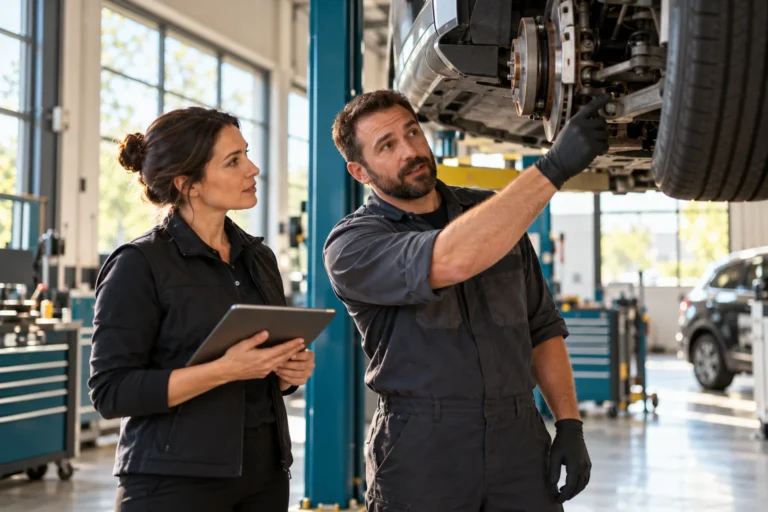
Brake and muffler franchises specialize in the systems under the vehicle: brake pads, rotors and calipers, exhaust and mufflers, shocks and struts, steering components and alignments. Many locations add oil changes, tires and general maintenance to round out the menu. Customers are everyday drivers responding to a warning sound or a failed inspection, along with fleets that need dependable brake service to keep vehicles safe and legal.
Tickets are mid-sized and needs-based, and because brakes wear on a predictable cycle, a well-treated customer tends to return. The focused menu keeps training and parts inventory more manageable than a full repair shop. Locations are usually leased multi-bay buildings on visible roads, with lifts and brake lathes. Technicians need solid skills, though the work is more standardized than engine diagnostics, which can ease hiring compared with general repair.
Why buyers consider brake and muffler franchises
- Safety-driven demand Brake and exhaust problems are hard to ignore, so customers act when symptoms appear.
- Focused menu A narrower set of services simplifies training, inventory and quality control.
- Predictable wear cycles Brakes and suspension parts wear out on a schedule, which brings customers back for the next set.
What it takes to invest
Brake and muffler shops often run from roughly $200,000 to $600,000 all in, depending on bay count, lifts and brake equipment, leasehold improvements, initial parts inventory and local rent. Converting an existing automotive building can reduce buildout costs. Hold working capital for payroll and marketing while your customer base grows. Item 7 of each brand's Franchise Disclosure Document details the components of the estimate.
The owner's role
Owners typically run the shop as managers: hiring and scheduling technicians, overseeing the counter, approving estimates, managing parts costs and marketing to local drivers and fleets. Mechanical experience is helpful but rarely required. The first year usually calls for full-time presence. With a reliable manager in place, many owners move toward oversight of several locations, since the standardized menu repeats well from shop to shop.
What to evaluate
- How the brand balances core brake and exhaust work with oil, tires and alignment
- Parts pricing and supplier arrangements, since parts make up much of each ticket
- Lifetime or long-term warranties on parts and how they affect future costs
- Availability of brake and suspension technicians in your market
- Local vehicle safety inspection rules that could bring or shape demand
Who tends to do well
Brake and muffler franchising fits operations-minded owners who want a focused service model that can repeat across locations. Veterans and former retail or service managers often appreciate the clear processes. It suits buyers ready to manage hourly technicians and a counter team, who want a defined menu rather than the full complexity of general repair.
Questions buyers ask
What services do brake and muffler franchises offer?
Core services usually include brake pads, rotors, calipers, exhaust and mufflers, shocks, struts and steering. Many locations add oil changes, tires, alignment and inspections. The exact menu varies by brand, so review what each franchisor requires you to offer and what equipment that demands.
Are lifetime warranties on brake parts a risk for owners?
They can be. Some brands offer long-term or lifetime warranties on parts like pads or mufflers, which bring customers back but can create future labor or parts costs. Ask how warranty claims are handled, who pays for replacement parts and how existing owners manage the impact.
How many technicians does a brake shop need?
Staffing depends on bay count and volume, and most shops run with a small team of technicians plus a counter or service manager. Ask the franchisor for typical staffing plans and talk with existing owners about hiring difficulty and pay in markets similar to yours.