
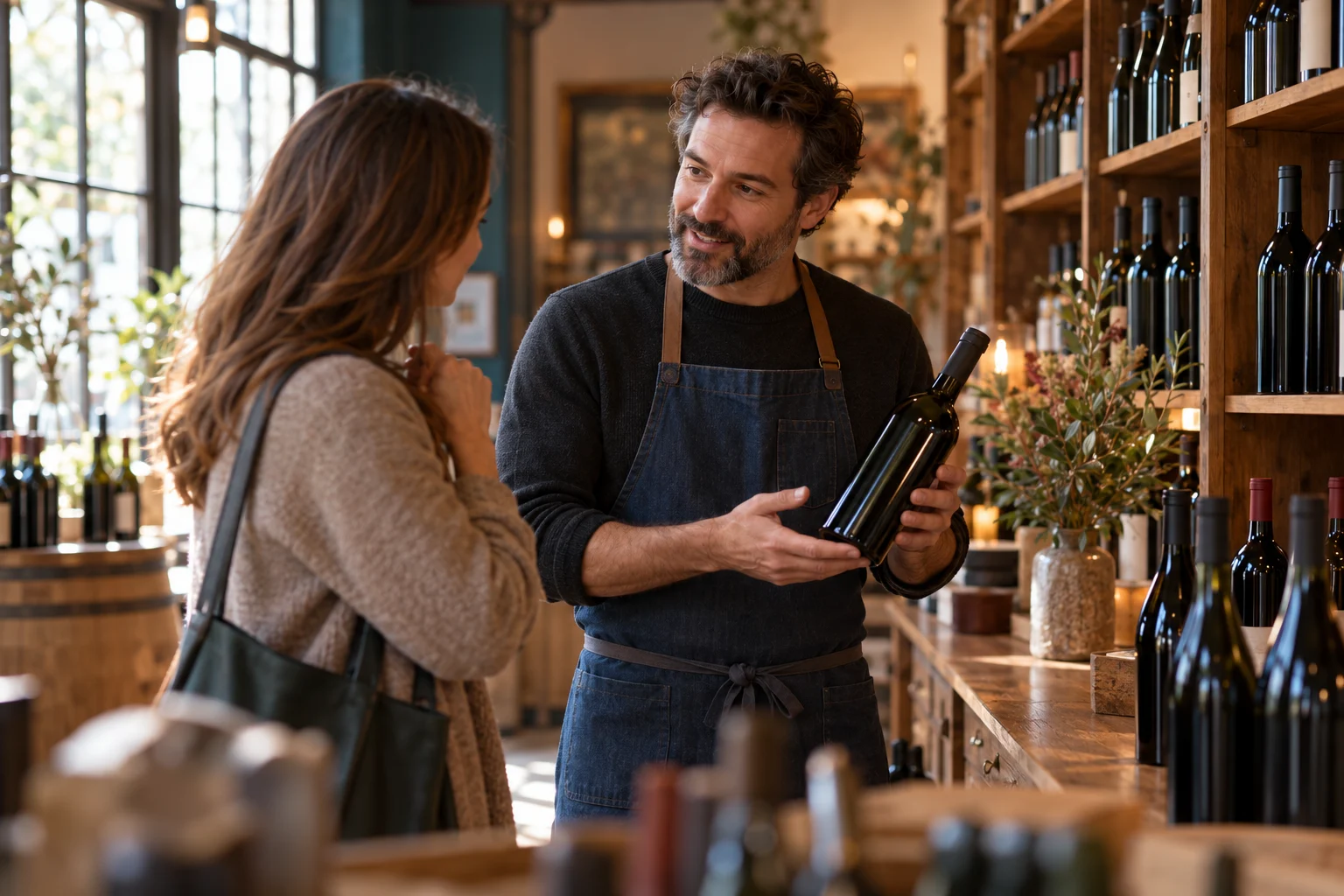
How wine and specialty foods franchises work
Wine and specialty foods franchises include wine shops, wine bars with retail, gourmet markets and stores focused on olive oil, cheese, spices, coffee, tea or chocolate. Customers are food lovers, gift buyers and hosts who want something better than the supermarket shelf, and corporate clients buying gifts in volume.
Revenue comes from retail sales, tastings, classes, gift baskets, clubs and catering or corporate gifting. Wine clubs and subscriptions add recurring revenue. Margin depends on assortment, pricing and controlling spoilage or aging stock. Alcohol sales require licensing that varies by state and sometimes by county, which can affect what you sell and how. Stores usually lease an attractive space in an upscale center, invest in fixtures and climate control, and hire staff who can confidently recommend products. Tasting rooms and classes often run in the evening, and gift baskets peak in the weeks before the year-end holidays.
Why buyers consider wine and specialty foods franchises
- Curated experience Tastings, pairings and expert advice create a reason to shop in person.
- Gifting and corporate sales Holiday and business gifts add larger orders on top of everyday purchases.
- Clubs and memberships Wine clubs and subscriptions build recurring revenue and loyal regulars.
What it takes to invest
Wine and specialty food franchises often require roughly $300,000 to $900,000 or more all in, depending on store size, build-out, refrigeration or climate control, opening inventory, any seating or bar area and local rents. Licensing costs and timelines vary. Keep working capital for slow months and inventory replenishment. Item 7 of the Franchise Disclosure Document lists each brand's estimate.
The owner's role
Owners often lead tastings, events and community partnerships while managing buying, staff training and compliance with licensing rules. Evenings and weekends tend to be busy with events. Over time a manager can run daily operations, letting the owner focus on corporate gifting, clubs and growth. Expect to spend real time building relationships with distributors, local producers and corporate gift buyers.
What to evaluate
- Alcohol licensing requirements, availability and timelines where you plan to open
- Inventory purchasing rules and distributor relationships in your state
- Spoilage, aging stock and markdown practices for perishables
- Revenue from clubs, events and corporate gifting versus walk-in sales
- Competition from grocery chains, warehouse clubs and online sellers
Who tends to do well
Wine and specialty foods suit owners who love food and hospitality, enjoy teaching customers and can manage inventory and compliance carefully. Former hospitality, sales and corporate professionals often fit well. It requires solid capital and patience to build a loyal following.
Questions buyers ask
Do I need a liquor license for a wine franchise?
Almost always, and rules vary by state and locality. Some areas limit license availability or what can be served. Confirm what applies where you live and have a qualified attorney review requirements before signing.
How do wine shops compete with grocery stores?
Through curation, staff knowledge, tastings, clubs and events. Ask current owners how their assortment differs from grocery and warehouse stores and which services drive repeat visits. Exclusive or small-producer selections often help.
Can I use an SBA loan for a wine or specialty food franchise?
Many owners use SBA-backed financing, but eligibility depends on the lender, the brand and your credit and capital. Some lenders treat alcohol businesses differently, so speak with a franchise-experienced lender early.