
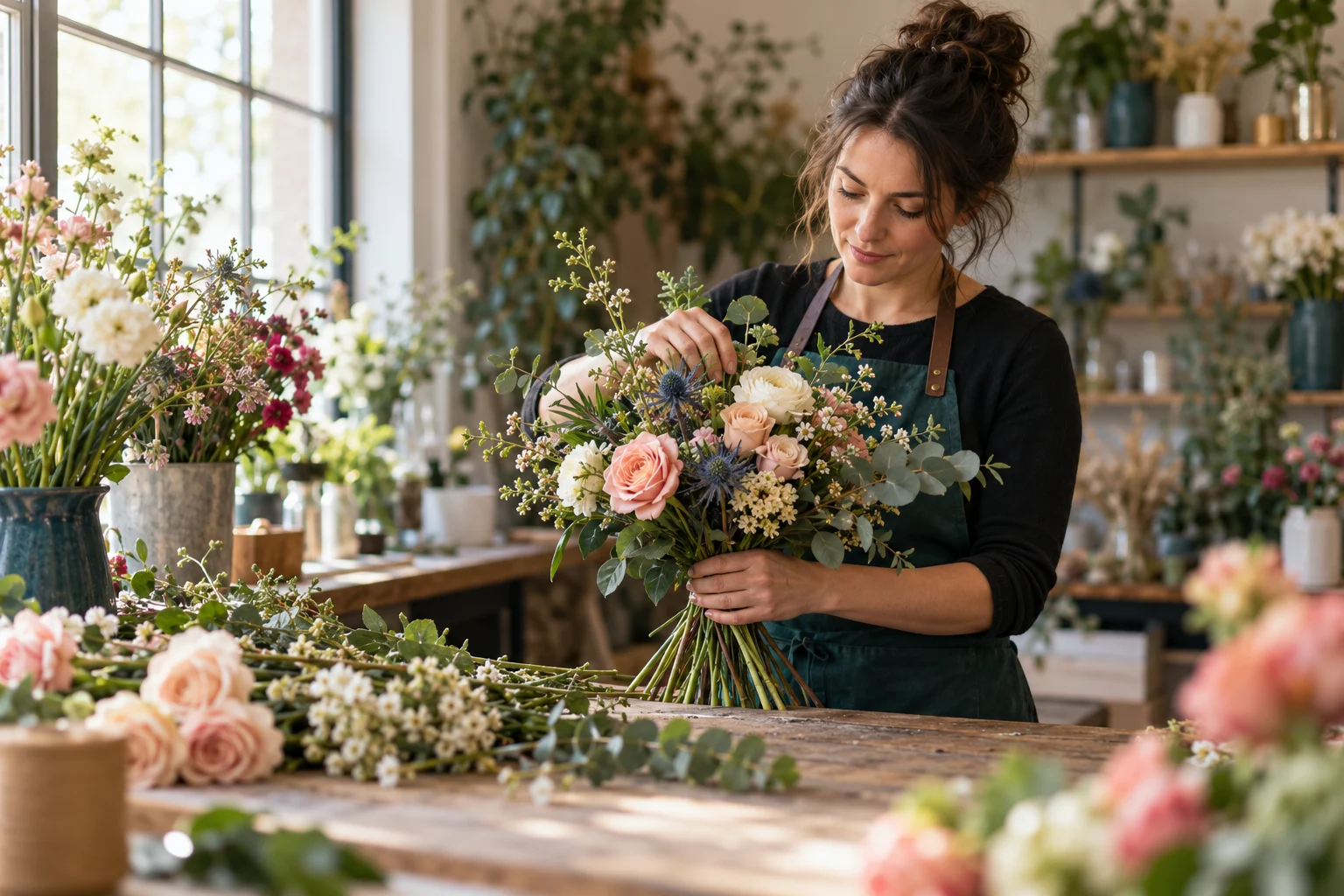
How floral franchises work
Floral franchises include retail flower shops, design studios and smaller formats that focus on delivery, events or subscriptions. Customers buy for birthdays, anniversaries, sympathy, weddings and corporate occasions, and businesses order recurring arrangements for lobbies, restaurants and offices. Some models also sell plants, gifts and add-ons.
Tickets range from a single bouquet to a full wedding contract, and revenue swings sharply around Valentine's Day, Mother's Day and the winter holidays. Recurring accounts such as weekly office arrangements or subscription bouquets smooth the calendar. Product is perishable, so ordering, cooler management and waste control shape margins. Many shops operate from a modest storefront or studio space with a cooler and work area, plus delivery vehicles or third-party drivers. Small formats can open with a lean crew, then add designers for peak seasons.
Why buyers consider floral franchises
- Emotional purchases Flowers mark life events, so demand comes from occasions people do not skip.
- Creative work Owners who enjoy design can build a reputation for a recognizable local style.
- Recurring accounts Corporate, restaurant and subscription orders add predictable volume between holidays.
What it takes to invest
Floral franchises often range from roughly $50,000 to $300,000 all in, depending on whether you run a studio, a delivery-focused format or a full retail shop, plus cooler equipment, vehicles and build-out. Perishable inventory turns quickly but must be bought ahead of every peak. Keep working capital for slower months. Item 7 of the Franchise Disclosure Document lists each brand's estimate.
The owner's role
Most owners are hands-on, designing arrangements, ordering product, managing delivery and selling to event clients and businesses. Peak holidays demand very long days and extra temporary help. As the business grows, owners can hire lead designers and focus on wedding sales, corporate accounts and marketing, but this category rarely becomes fully absentee.
What to evaluate
- Waste and shrink on perishable product, and how the franchisor helps control it
- Wire service and order-gatherer fees on incoming online orders
- Training for owners without floral design experience
- Delivery model, vehicle costs and coverage area
- Share of revenue from events and corporate accounts versus walk-ins
Who tends to do well
Floral suits creative, people-oriented owners who stay calm under deadline pressure. Event planners, designers and career changers who want a hands-on, local business often thrive. It works best for someone ready to work hard through holiday peaks and to build relationships with venues, funeral homes and offices.
Questions buyers ask
Do I need floral design experience to open a flower franchise?
Many franchisors train owners with no background, though some prefer hiring an experienced designer early. Ask how long initial training lasts and how current owners without experience handled their first peak holiday.
How seasonal is a floral business?
Quite seasonal. A few holidays account for heavy volume, while summer and late winter can be slower. Weddings, sympathy work and corporate accounts help balance the year, so ask how existing owners build those segments.
Is a floral franchise a low-cost option?
Studio and delivery-led formats can be among the lower-cost retail options, while full storefronts cost more. Total cost depends on the brand, coolers, vehicles and space. Review Item 7 of each brand's disclosure document.