How restaurant and kitchen cleaning franchises work
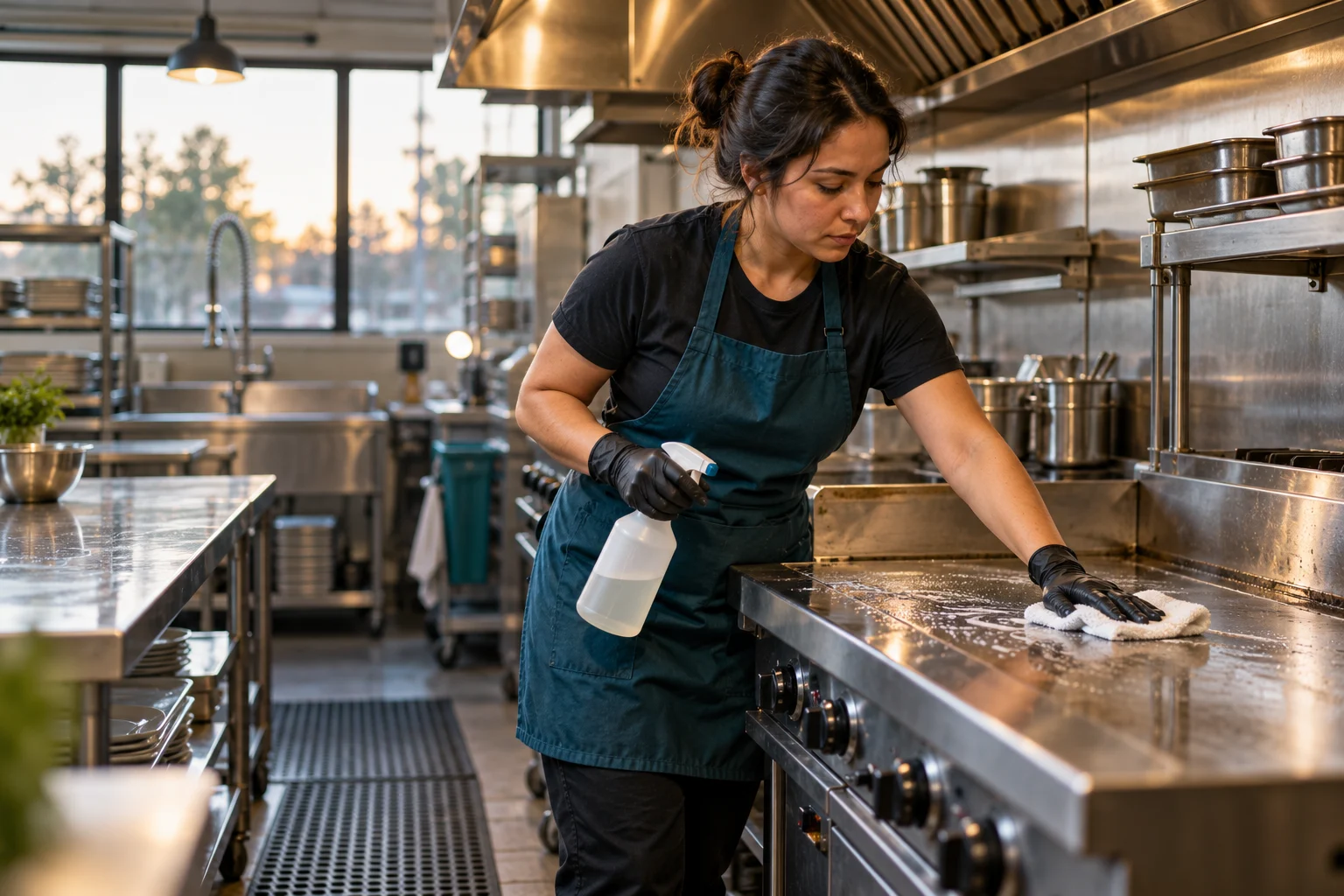
A restaurant cleaning franchise specializes in commercial kitchens: degreasing hoods and exhaust ducts, deep cleaning cooking equipment, scrubbing floors and walls, and sometimes pressure washing outdoor areas or grease containment. Customers include independent restaurants, chains, hotels, hospitals, schools and other institutional kitchens. Many of them face fire code and health inspection requirements, so periodic professional cleaning is a standing need rather than an optional extra.
Work is usually scheduled on a recurring basis, such as monthly or quarterly, which builds a route of repeat accounts. Tickets are higher than routine janitorial visits because the work is specialized, dirty and equipment-intensive. Crews work overnight when kitchens are closed, operating from vans or trucks rather than a storefront. Safety training, documentation for inspectors and reliable night crews are central to delivering the service well.
Why buyers consider restaurant and kitchen cleaning franchises
- Compliance-driven demand Fire and health codes push kitchens to keep hood and exhaust systems clean on a schedule.
- Specialized niche The work is technical and unpleasant, which keeps the field narrower than general janitorial.
- Recurring service routes Accounts on monthly or quarterly schedules create predictable, repeat revenue.
What it takes to invest
Restaurant cleaning franchises often run from roughly $75,000 to $250,000 all in, depending on vehicles, pressure washing and degreasing equipment, territory size and initial marketing. Certifications and insurance add to startup costs. Working capital should cover crew payroll while accounts build. Item 7 of the Franchise Disclosure Document gives each brand's estimate and the assumptions behind it.
The owner's role
Owners divide time between selling to restaurant operators and facility managers and managing overnight crews. Early on, many owners work alongside crews at night to learn the service and keep quality high. As accounts grow, a crew lead runs the overnight work while the owner focuses on sales, scheduling, compliance documentation and customer service during the day. Expect irregular hours until the team is stable.
What to evaluate
- Fire code and hood cleaning certification requirements in your state and city
- Liability and property insurance levels needed for overnight kitchen work
- Concentration of restaurants and institutional kitchens in your territory
- Crew safety training for chemicals, ladders, rooftops and confined spaces
- How the franchisor helps win multi-location restaurant and institutional accounts
Who tends to do well
Restaurant cleaning suits owners who do not mind dirty, technical work and overnight schedules, and who can sell to busy restaurant operators. Veterans often relate to the safety discipline and crew leadership it demands. It fits buyers who want a specialized service with recurring accounts and less direct competition than general cleaning.
Questions buyers ask
What does a kitchen hood cleaning franchise do?
It removes grease buildup from hoods, filters, ducts and exhaust fans in commercial kitchens to reduce fire risk and support code compliance. Many brands also clean equipment, floors and walls. Services and certification requirements vary by brand and location, so confirm what applies where you plan to operate.
Do restaurant cleaning crews work at night?
Yes, most work happens after closing or before opening so kitchens are not disrupted. That means overnight crews and an owner who must manage people working late. Ask existing owners how they hire, supervise and retain crews on night schedules and what that costs.
Is certification required for hood cleaning?
Requirements vary by state and city. Some places expect technicians to hold specific hood cleaning certifications or follow recognized fire safety standards, and insurers may require them. Confirm what applies in your area and ask the franchisor what training and certification it provides.