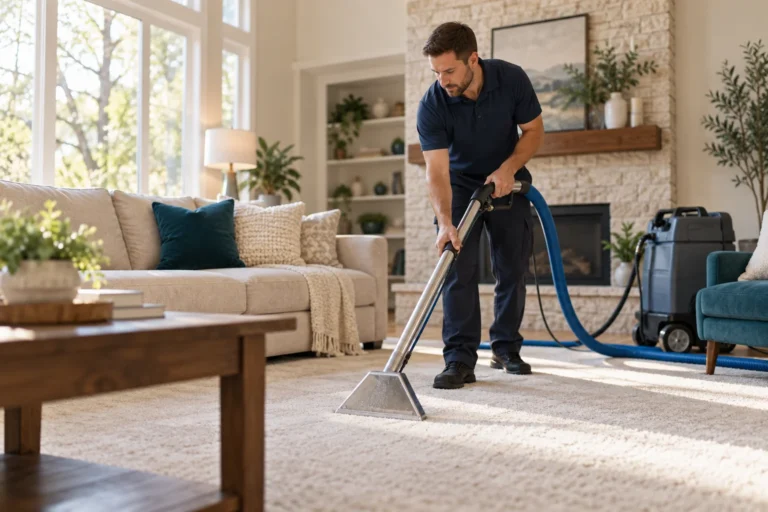

How house cleaning and maid service franchises work
A maid service franchise cleans private homes, usually with small teams that follow a standard checklist for kitchens, bathrooms, floors and living areas. Many offer deep cleans, move-in and move-out service and add-ons like inside appliances. Customers tend to be dual-income families, professionals with long hours, older homeowners and people preparing a home for sale. Trust matters, because the team works inside someone's home, often while they are away.
Most revenue comes from recurring weekly, biweekly or monthly visits, so retaining clients matters as much as finding them. Tickets are modest per visit, but a full schedule of regular clients produces steady volume. The business runs from a small office or home base, with vehicles and supplies rather than a storefront. Hiring dependable cleaners, scheduling efficiently and responding quickly to complaints are the operational heart of the model.
Why buyers consider house cleaning and maid service franchises
- Recurring household clients Regular visits create a predictable schedule and a steady revenue base.
- Low fixed overhead No storefront is needed, so most costs flex with the work.
- Manager-led model Owners focus on hiring, marketing and service quality rather than cleaning homes themselves.
What it takes to invest
House cleaning franchises often require roughly $75,000 to $200,000 all in, depending on territory, vehicles, office space, equipment, initial marketing and training fees. Working capital is important because you hire and train teams before the schedule is full. Some brands require a minimum number of vehicles or staff at launch. Item 7 of the Franchise Disclosure Document lays out each brand's estimate.
The owner's role
Owners of maid services manage the office rather than clean. Core tasks include marketing to households, answering inquiries and quoting, recruiting and training cleaners, building efficient routes and following up on quality. A strong office manager and team leads can let the owner shift to a semi-absentee role over time, though early months usually demand close involvement, especially in hiring.
What to evaluate
- Cleaner recruiting and retention, and what current owners pay to stay competitive
- Whether cleaners are employees, and how the brand handles insurance and bonding
- Client retention on recurring schedules and the main reasons customers cancel
- Marketing costs to fill the schedule in your territory
- Household density and demographics in the territory you are offered
Who tends to do well
Maid service ownership fits organized, people-focused managers who enjoy building a team and delivering consistent service. It draws many women owners and career changers who want a business with a lower entry cost and daytime hours. Semi-absentee investors can do well once a capable office manager is in place.
Questions buyers ask
Do maid service franchise owners clean houses?
Usually not after the start. Most brands design the role around management: marketing, hiring, scheduling and quality control. Some owners help with cleaning early on to learn the work or cover shifts. Ask the franchisor what role it expects and talk with owners about their first year.
How do maid service franchises keep clients?
Consistency is the main factor: the same team, a dependable checklist, punctual arrival and a quick fix when something is missed. Many brands use satisfaction follow-ups and quality checks. Ask current owners about their retention and what most often causes clients to cancel.
Can a house cleaning franchise be semi-absentee?
It can, once an office manager and reliable team leads run daily operations. Most owners need to be heavily involved during launch, especially in hiring. Ask the franchisor whether it allows semi-absentee ownership and what staffing it requires before you step back.