
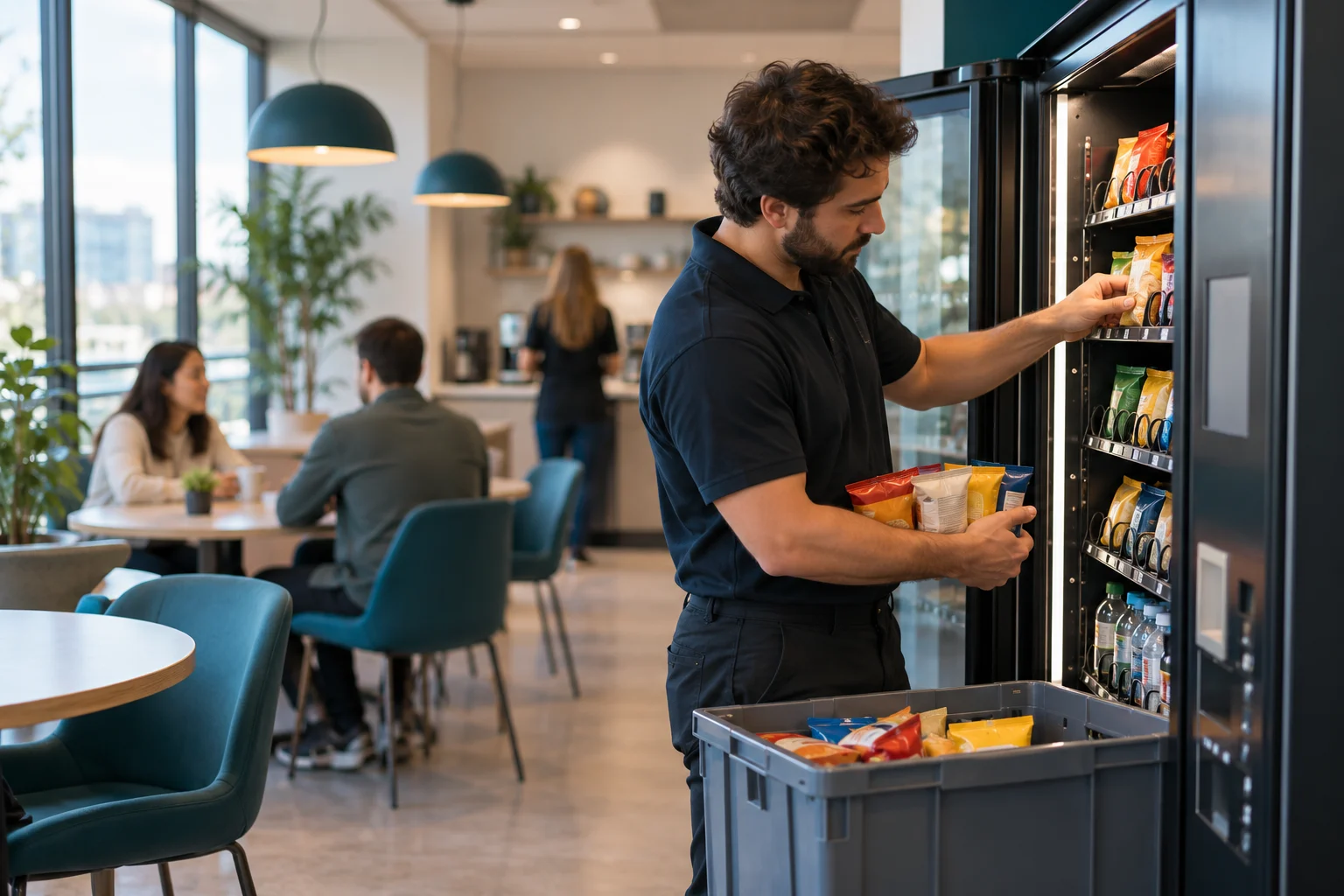
How vending franchises work
Vending franchises install and service snack, drink, fresh food or specialty machines, and sometimes unattended micro-markets with self-checkout kiosks. Placements include offices, factories, schools, hospitals, gyms, apartment complexes and hotels. The location host provides space, and you stock, maintain and collect revenue, sometimes sharing a commission with the host.
Revenue comes from many small transactions repeated daily, so machine placement and product mix drive results. Owners run a service route, restocking and cleaning machines on a schedule, often using remote monitoring that shows inventory levels. There is no storefront, and many owners run the business from home with a vehicle and storage space. Cashless payment systems are now common. Securing and keeping strong placements is the main ongoing challenge, along with managing theft, machine breakdowns and product expiration. Healthy options and fresh food are a growing request from employers.
Why buyers consider vending franchises
- Low overhead No retail lease and minimal staff keep fixed costs lower than storefront businesses.
- Flexible schedule Route servicing can often be planned around other work, supporting part-time or semi-absentee ownership.
- Scalable routes Owners can add machines and placements gradually as they learn which sites perform.
What it takes to invest
Vending franchises often cost roughly $20,000 to $250,000 all in, depending on the number and type of machines, fresh food or micro-market equipment, a service vehicle, initial inventory and any location-securing services the brand provides. Some buyers start small and add machines over time. Keep working capital for inventory and slow placements. Item 7 of the Franchise Disclosure Document lists the estimated initial investment.
The owner's role
Owners secure placements, plan routes, restock and clean machines, handle repairs and track sales. Early on this is usually hands-on, often a few days a week. As the route grows, some owners hire route drivers and focus on adding locations. Many run the business from home, with storage for inventory and a reliable vehicle.
What to evaluate
- How placements are secured and whether the brand guarantees or only assists with locations
- Commission arrangements with location hosts and typical contract terms
- Machine costs, warranties and repair support
- Remote monitoring and cashless payment technology fees
- Product spoilage and theft controls, especially for fresh food
Who tends to do well
Vending franchises suit owners seeking a lower-cost, home-based or semi-absentee business who are comfortable with physical route work and business-to-business outreach. They can also fit those wanting to start part time and grow gradually. Physical stamina and organization matter more than prior industry experience.
Questions buyers ask
Is a vending franchise a passive business?
Not entirely. Machines need restocking, cleaning, repairs and new placements. Many owners start part time and hire route help as they grow, but ongoing management is required. Ask existing owners how many hours they work.
How do vending franchise owners find locations?
Some brands provide placement support or locating services, while others leave it to the owner. Placement quality drives results, so ask exactly what support is offered and talk to owners about how their locations performed.
Do I need a license to operate vending machines?
Many areas require a business license, sales tax registration and, for food machines, health permits. Licensing varies by state and city, so confirm what applies where you live before placing machines.