
How repair and restoration franchises work
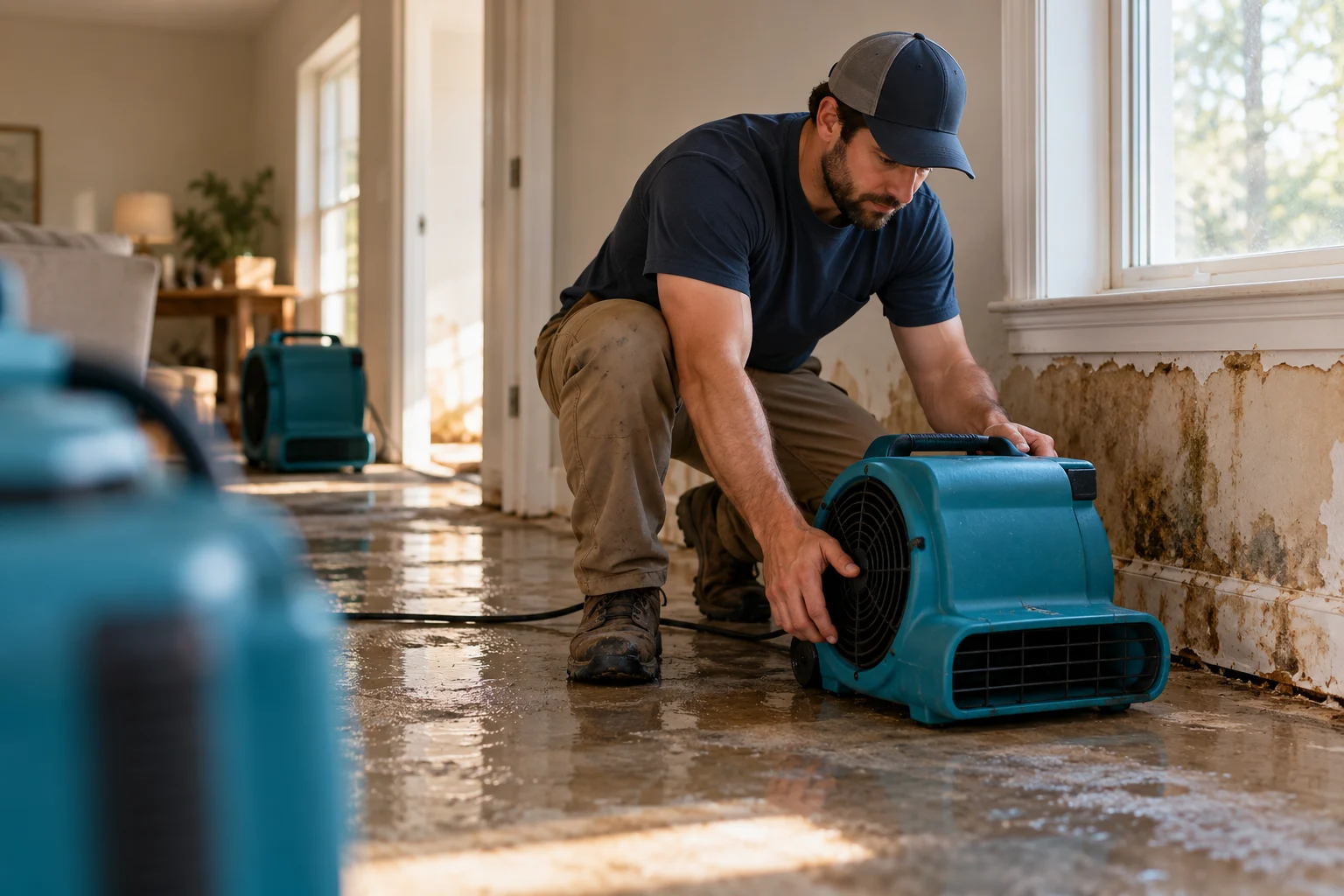
A repair and restoration franchise handles water extraction and drying, fire and smoke cleanup, mold remediation, storm recovery and related reconstruction for homes and commercial buildings. Customers include homeowners, property managers, businesses and the insurance adjusters who approve claims.
Revenue is mostly job-based, with many projects paid through insurance claims, which means estimating in industry software, documentation and sometimes waiting for payment. Tickets range from a modest drying job to a large reconstruction. Demand is unpredictable and can spike after storms. The business needs trucks, drying and remediation equipment, a warehouse and trained technicians available around the clock. Relationships with insurance agents, adjusters, plumbers and property managers drive referral flow. Mitigation work, which stops further damage, is usually followed by reconstruction, and brands differ on whether franchisees handle the rebuild themselves or refer it out. That choice shapes staffing, licensing and revenue per job.
Why buyers consider repair and restoration franchises
- Need-driven emergencies Water and fire damage must be addressed quickly, regardless of economic conditions.
- Large job potential Mitigation and reconstruction can produce sizable projects from a single call.
- Referral relationships Agents, adjusters, plumbers and property managers can send steady work once trust is built.
What it takes to invest
Repair and restoration franchises often run from roughly $150,000 to $450,000 or more all in, depending on trucks, drying and remediation equipment, warehouse space, certifications, insurance and initial staffing. Working capital is especially important because insurance-paid jobs can take time to collect. Item 7 of the Franchise Disclosure Document lists each brand's estimated initial investment, and lenders may be involved.
The owner's role
Owners build referral relationships, oversee estimating and insurance documentation, and manage technicians on emergency schedules. Calls come at night and on weekends, so on-call rotations are part of the job. As the business grows, owners hire a production manager and estimators, then focus on business development, collections and quality. Collections need constant attention.
What to evaluate
- Certification, licensing and mold or asbestos rules in your state
- How insurance claims are estimated, documented and collected, and typical payment timelines
- Reliance on third-party program referrals versus local relationships
- Equipment and warehouse needs, and how the franchisor supports large losses
- On-call staffing, technician retention and the demands of after-hours work
Who tends to do well
Restoration suits calm, organized leaders who perform well under pressure and like building referral networks. Veterans and first responders often relate to the emergency-response pace. Buyers need meaningful capital, patience with insurance processes and comfort with on-call operations. Steady nerves help too.
Questions buyers ask
How do restoration franchises get paid?
Many jobs are paid through the property owner's insurance claim, which involves detailed estimates, documentation and adjuster approval. Payment can take longer than cash jobs. Ask franchisees about collection timelines and review Item 19 for any performance data disclosed.
Do restoration technicians need certifications?
Industry certifications are commonly expected by insurers and customers, and some states license mold or other remediation work. Licensing varies by state, so confirm what applies where you live and what training the franchisor provides.
Can I get an SBA loan for a restoration franchise?
Many buyers explore SBA financing for equipment-heavy franchises like restoration. Eligibility and terms depend on the lender, the brand and your finances, so talk with a qualified lender early. No outcome is guaranteed.